Key Highlights
- Arabic henna stands out for bold flow, floral motifs, and generous negative space.
- You can choose intricate designs for bridal mehndi or lighter looks for casual wear.
- Popular styles include flowers, paisleys, mandalas, bracelet trails, and geometric shapes.
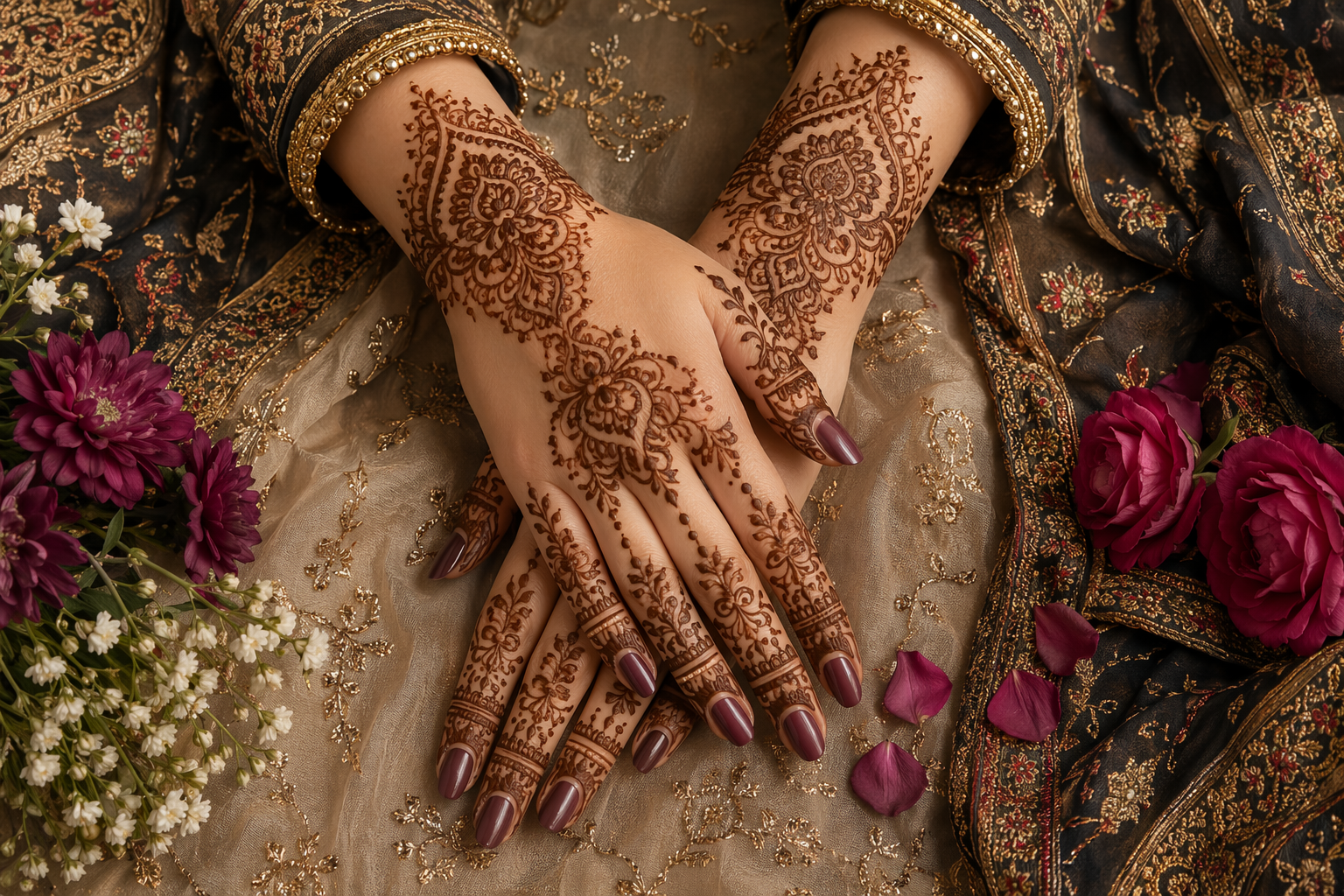
- Many arabic henna patterns suit special occasions, from weddings to festive gatherings.
- Beginners often start with simple lines, open spacing, and easy finger or wrist patterns.
- Good paste, careful henna application, and smart aftercare help your stain last longer.
Introduction
Henna art has stayed loved for thousands of years, and arabic designs remain one of the most admired styles today. Their flowing layout, bold outlines, and open spaces make them easy to recognize and easy to wear. Whether you want something striking for weddings, Eid, or other special occasions, these patterns offer beauty without looking crowded. In this guide, you will find design ideas, motif meanings, and practical tips to help you choose a style that fits your moment.
12 Majestic Arabic Henna Designs for Every Occasion
Arabic mehendi designs give you plenty of options for a wedding, festival, or relaxed gathering. This art form is known for bold movement, floral flow, and clear spacing that makes each element stand out. If you have asked for trending Arabic henna designs for the festive season, this list gives you strong inspiration.
From minimal trails to bridal statements, these styles work across many moods and settings. Talented mehndi artists often mix classic motifs with fresh placement ideas to create beautiful body art that feels personal. If your special day is coming up, these design directions can help you narrow your choice.
1. Elegant Floral Arabic Henna Designs
Floral looks sit at the heart of arabic henna. They usually feature large blooms, leaf clusters, and curved vines that move naturally across the hand or wrist. This is one reason floral patterns feel so balanced. They bring detail, but they still leave enough open skin for the design to breathe.
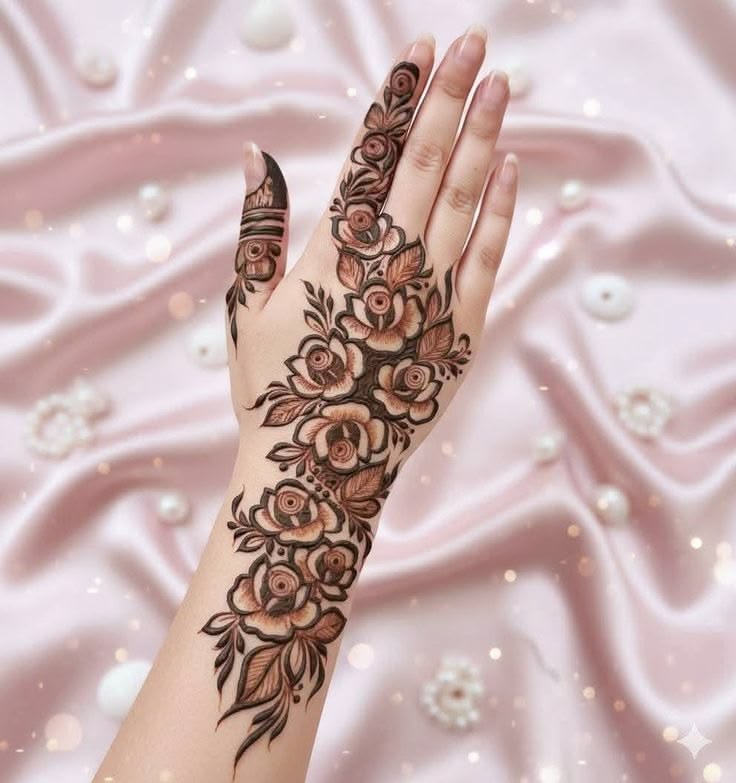
If you wonder how Arabic henna designs incorporate floral elements, the answer is simple. Artists use floral motifs as focal points, then connect them with soft stems and sweeping lines. That creates delicate floral patterns with movement instead of a packed finish.
- Roses and layered petals suggest joy, love, and new beginnings.
- Lotus-based floral patterns add a spiritual touch and timeless beauty.
- Vines and leaves help join flowers into one graceful arabic henna layout.
2. Paisley Motif Arabic Mehndi Designs
Paisley motif designs are a favorite when you want something classic with character. The paisley, also called buta or mango, has a curved teardrop form that fits beautifully into flowing arabic layouts. It blends well with leaves, dots, and flowers, making it one of the easiest traditional motifs to recognize.
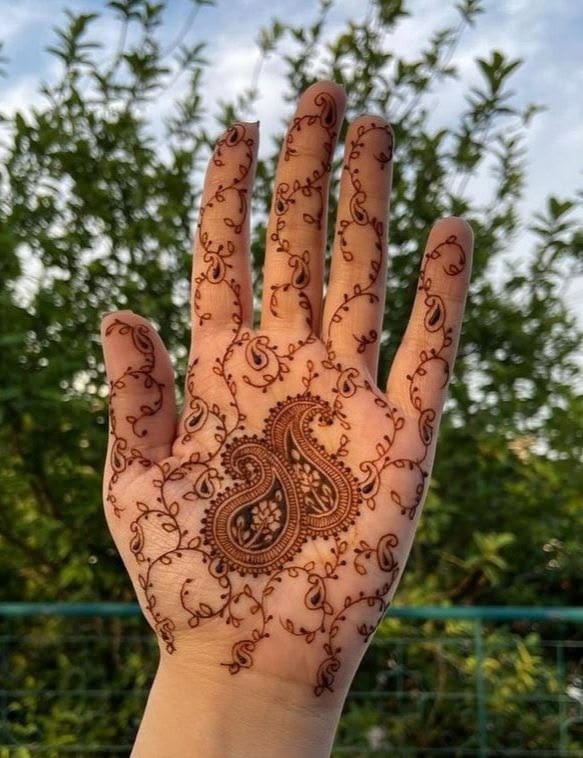
In many mehndi styles, paisley motifs represent good fortune, fertility, and abundance. That makes them a strong pick for weddings, pregnancy celebrations, and other meaningful events. You will often see them used as central shapes, then filled with intricate designs or paired with lighter surrounding details.
- Large paisleys create a bold focal point on the palm or back of the hand.
- Smaller repeating paisleys add rhythm without making the design heavy.
- Paisleys pair well with florals for a richer, layered finish.
3. Minimalist Arabic Henna Patterns for Beginners
If you are new to mehndi, minimalist Arabic patterns are an excellent choice. They are easier to place, quicker to apply, and less intimidating than dense coverage. This style uses clean lines, small floral touches, and open spacing, so even simple work can look polished.
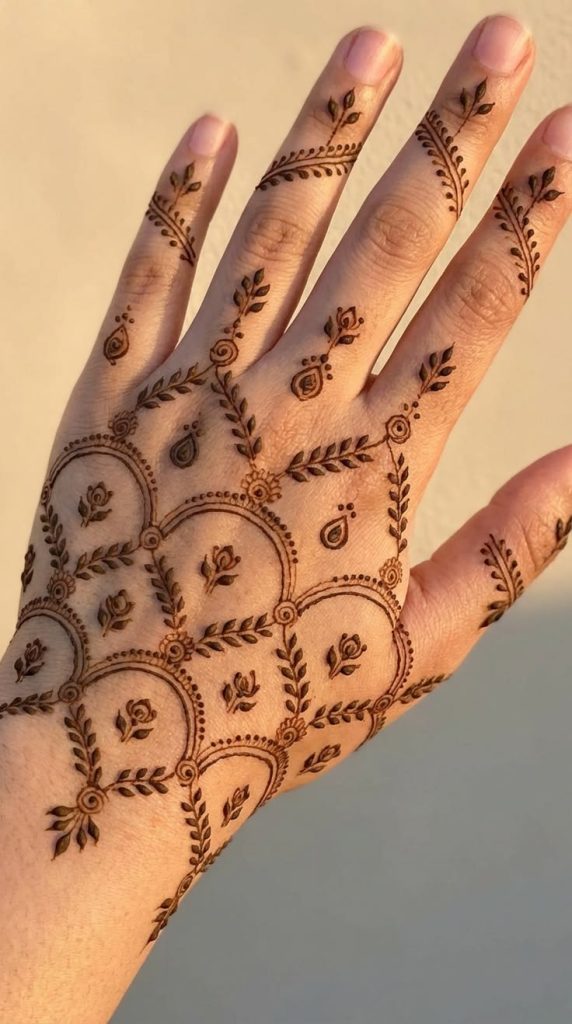
Many people ask what some simple Arabic henna patterns suitable for beginners are. Start with finger trails, a small wrist cuff, or one flower linked to a vine. These minimalistic designs leave room for correction and still look stylish enough for everyday wear.
- Try a single diagonal vine across the hand with leaf details.
- Use dots, lines, and petals to build unique patterns slowly.
- Keep generous negative space so the design feels light and balanced.
4. Bridal Arabic Henna Designs with Intricate Details
For weddings, bridal henna often takes Arabic flow and adds richer filling. You get sweeping flowers, paisleys, peacock-inspired forms, and layered vines that extend across the entire hand and up the arm. If you want wedding inspiration, this is one of the best directions because it feels ornate without losing that open Arabic character.
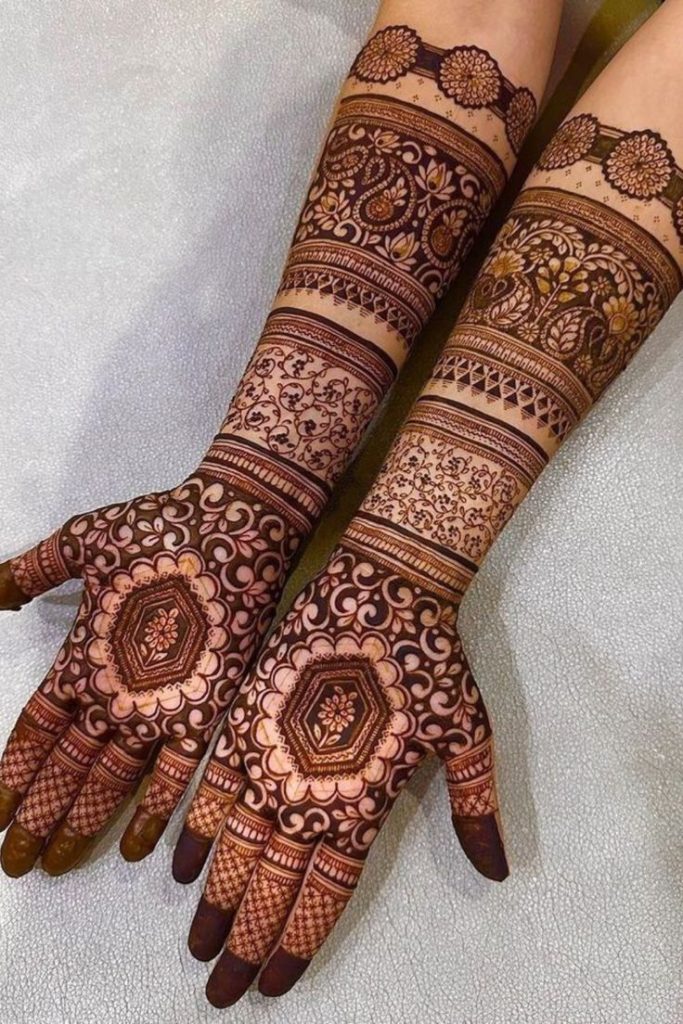
These elaborate designs are made for a special day. Skilled artists may also include hidden initials or meaningful symbols inside the pattern. The goal is to create intricate details that look striking in photos and still feel graceful on the skin.
| Bridal Feature | Why It Works |
|---|---|
| Large florals | Create a strong focal point and photograph well |
| Paisley sections | Add symbolism linked to abundance and new beginnings |
| Finger coverage | Gives bridal henna a fuller, ceremonial look |
| Open pathways | Preserve Arabic flow even in detailed work |
5. Geometric Arabic Mehndi Designs for Modern Look
Not every Arabic design needs flowers. Geometric Arabic mehndi uses angular forms, repeated lines, and structured spacing for a sharper feel. This approach draws from regional traditions, including North African and Berber-inspired patterning, where shape and symmetry carry a strong visual impact.
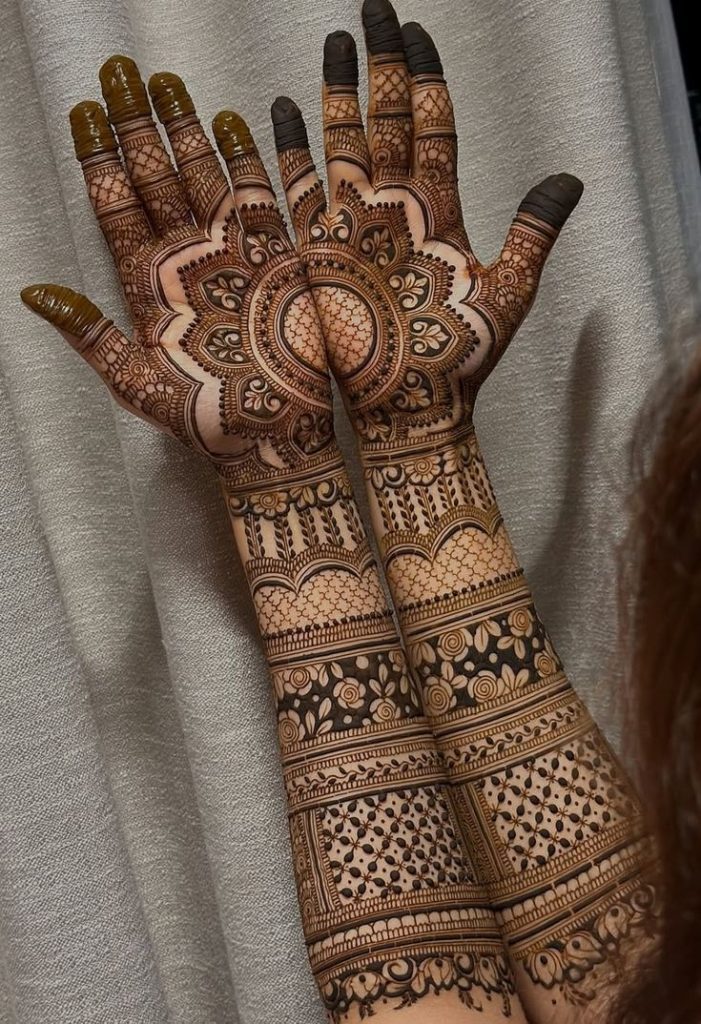
If you are looking for inspiration for modern Arabic henna art, geometric patterns are a smart place to start. They bring contemporary elements into a traditional format. That is why they appeal to fashion-forward wearers and modern brides who want something different from soft floral layouts.
- Diamonds, triangles, and grids give structure and edge.
- Repeated geometric shapes create a clean, organized finish.
- Bold borders on wrists or fingers make the design look current and fresh.
6. Bracelet-Style Arabic Henna Art
Bracelet-style henna is perfect when you want decoration without covering too much skin. The design wraps around the wrist like jewelry and may include flowers, chains, leaves, or small hanging details. Because it stays focused in one area, it feels neat and wearable for many events.
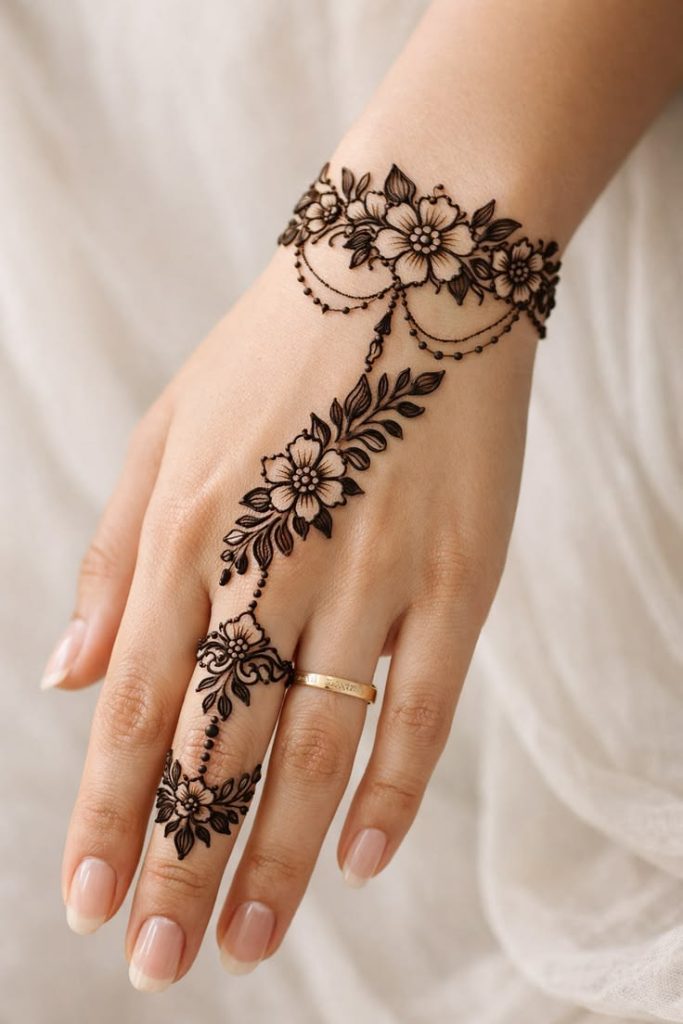
For the festive season, this is one of the trending Arabic henna ideas you can try. It gives you a polished look fast, and it pairs well with rings or bangles. The bracelet-style format also suits people who like visible design with a lighter overall layout.
Another reason this style works so well is its striking appearance. Bold lines define the wrist clearly, while smaller arabic elements keep the pattern elegant instead of busy. It is simple, stylish, and easy to personalize.
7. Finger-Trail Arabic Henna Designs
Finger-trail designs move from the wrist or back of the hand toward the fingers in one flowing path. This layout creates motion and helps the hand look longer and more elegant. It is a common Arabic choice because it feels light while still catching attention.
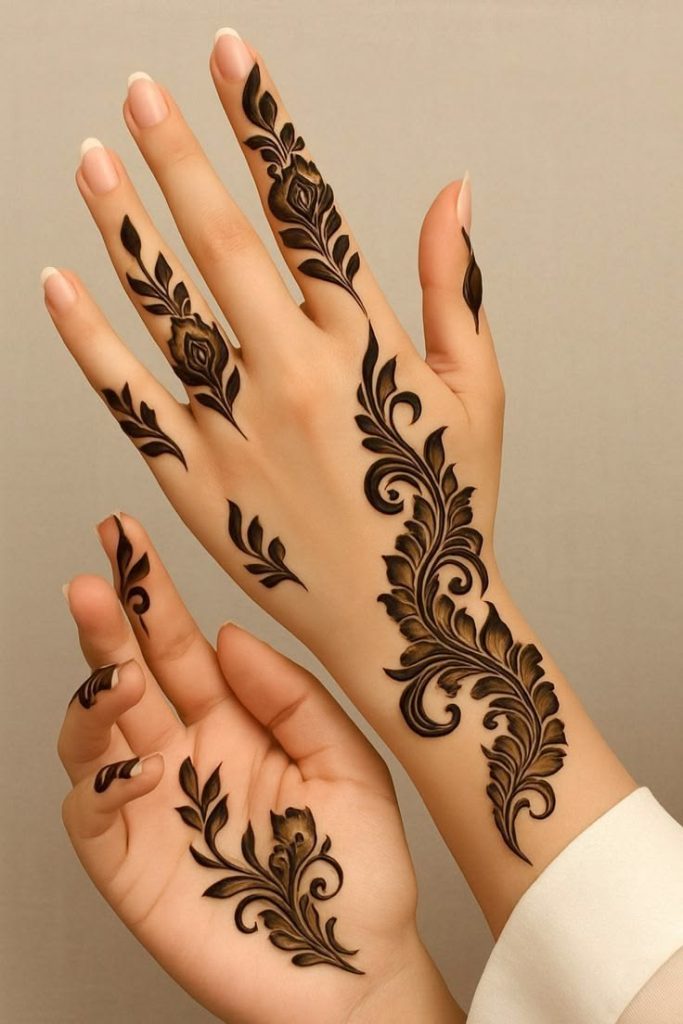
What makes Arabic henna designs different from other henna styles often comes down to this kind of placement. Instead of filling every section, Arabic work favors clean lines, bold strokes, and planned open areas. A finger-trail pattern shows that difference clearly. You see movement, not crowding.
You can keep this style delicate or make it bolder depending on the event. Some versions use one vine crossing the hand, while others decorate each finger in a slightly different way. That variety is what makes finger-trail layouts such unique patterns.
8. Lotus-Inspired Arabic Mehndi Patterns
Lotus-inspired patterns bring meaning as well as beauty. In henna, the lotus is linked with purity and spiritual awakening, which is why it often appears in wedding and celebratory designs. Its layered petal shape also fits naturally into Arabic flow, making it both symbolic and visually pleasing.
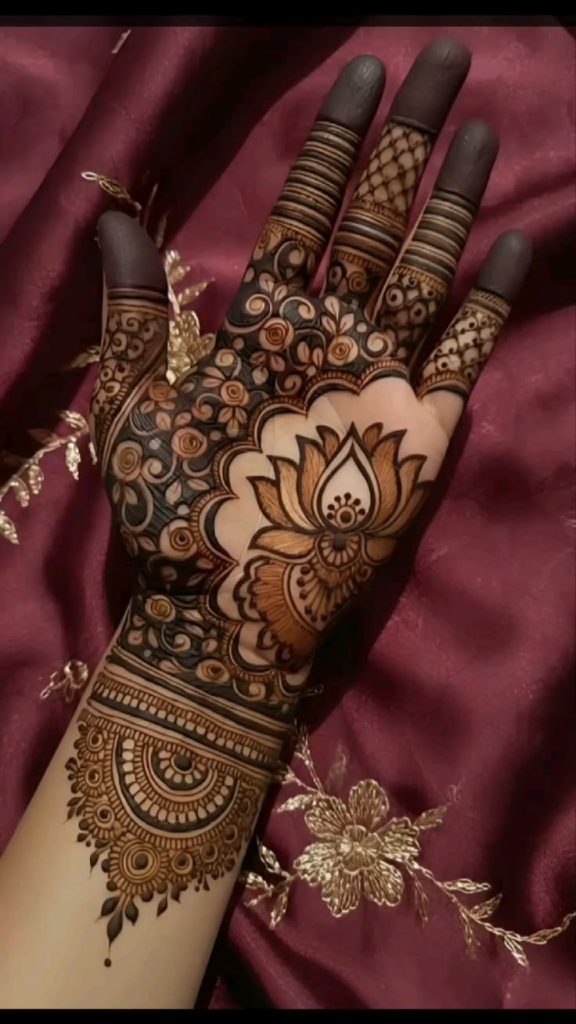
Henna has held a significant place across regions such as the Middle East, South Asia, and North Africa. Within that broad history, lotus motifs remain one of the most meaningful floral designs you can choose. They work well at the center of the palm or as a larger feature on the back of the hand.
- A single lotus creates a calm focal point.
- Lotus motifs pair beautifully with leaves and curved vines.
- They suit weddings, festivals, and other reflective celebrations.
9. Mandala Arabic Henna Patterns
Mandala patterns bring symmetry and focus to Arabic henna. Usually placed in the center of the palm, a mandala radiates outward in balanced layers. In henna tradition, the circular form is connected with unity, wholeness, and the universe, which gives it lasting appeal.
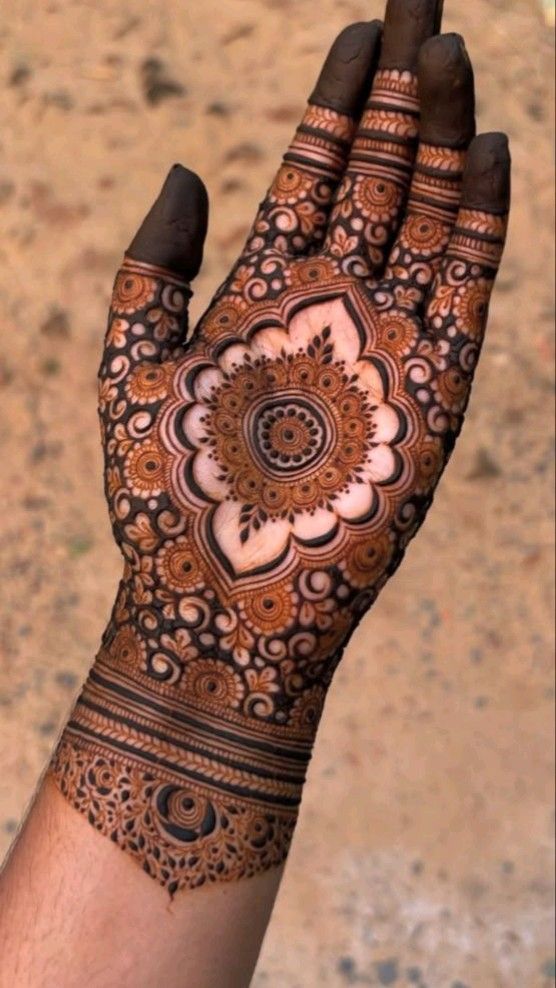
For festive wear, mandala styles remain a trending option because they look polished and meaningful at the same time. You can keep the center detailed, then add lighter trails toward the fingers. This balance helps the design feel Arabic rather than fully packed with dense patterns.
Many people also love the symbolism. A mandala can suggest harmony and, in some interpretations, good fortune. If you want beautiful body art that feels intentional, this style gives you a strong blend of structure, elegance, and occasion-ready charm.
10. Fusion Arabic-Indian Henna Styles
Fusion styles combine the airy flow of Arabic work with the richer fill of indian henna and pakistani mehndi. The result is detailed but still breathable. This mix has become one of the most requested options because it can be adapted for weddings, parties, and many special occasions.
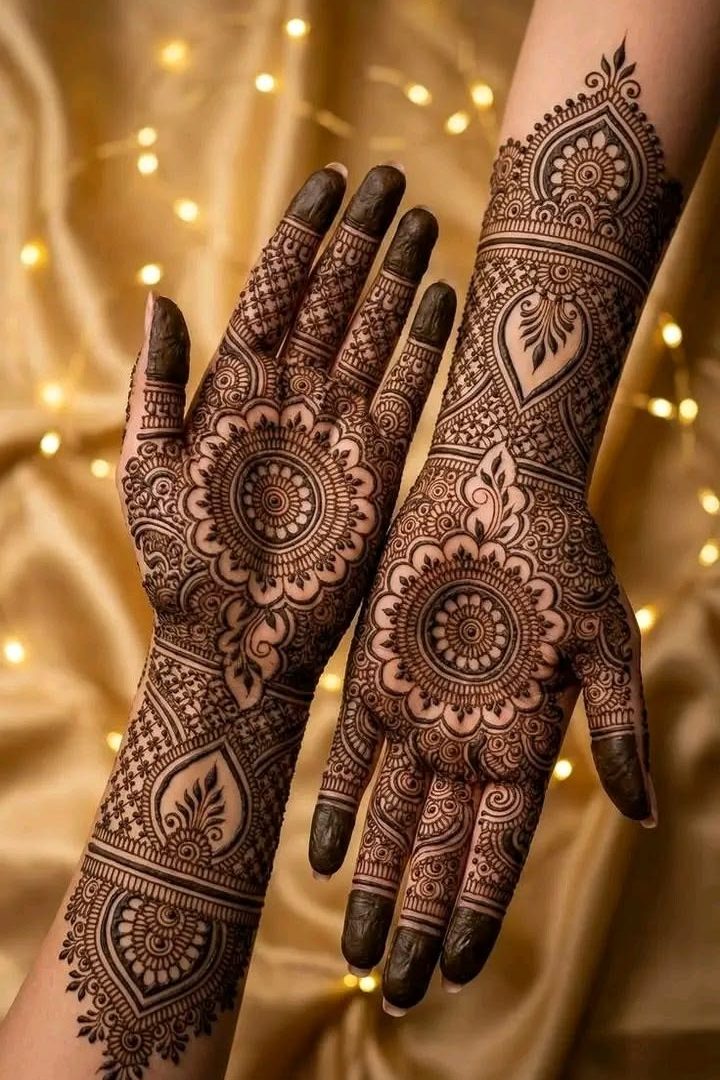
If you want to create easy Arabic mehndi designs at home, fusion can still work. Begin with an Arabic base such as a diagonal vine or bracelet trail. Then add selected fillers inspired by indian henna designs, like small paisleys, dots, or net-like accents, instead of covering everything.
- Start with one main floral or paisley path.
- Add only a few dense fillers for a unique look.
- Leave open skin between sections so the design stays balanced.
Tips and Inspiration for Perfect Arabic Henna Application
Great results start before the cone touches your skin. Clean the area well so oils and lotion do not block the stain. Good henna application also depends on fresh paste, often mixed with ingredients like lemon juice and essential oils, because natural quality affects both color and flow.
It also helps to match the design to your skin tone and event. A skilled henna artist can guide placement, line thickness, and spacing so the pattern looks clear and flattering. Next, let’s focus on one question people ask often: how to get crisp, clean results.
Achieving Crisp Lines in Arabic Henna Designs
Crisp lines make Arabic henna look refined. Since this style depends on contrast and spacing, shaky work is easier to notice. Start by washing the skin well and keeping your hand relaxed during application. The paste should flow smoothly, not feel too thick or dry.
Another key point is pace. Do not rush. Arabic layouts rely on clean lines, bold strokes, and generous negative space, so each curve needs control. Working steadily helps the design stay sharp and keeps flowers, vines, and borders from blending into each other.
- Practice pressure control before drawing long curves on skin.
- Let sections dry slightly so nearby details do not smudge.
- Keep open areas intentional to make crisp lines stand out more.
Popular Motifs and Their Meanings in Arabic Mehndi
Arabic mehndi becomes more personal when you know what the symbols suggest. Many traditional motifs come from long cultural histories and are used to express joy, renewal, unity, or abundance. That is why choosing a pattern can feel more meaningful than simply picking what looks nice.
Among the most recognized floral motifs are flowers for happiness and new beginnings, vines for devotion and vitality, and buds for fresh growth. Paisley motifs are linked with abundance and fertility. Lotus motifs point to purity, while the mandala suggests wholeness and harmony.
- Flowers often represent joy, celebration, and love.
- Paisleys are associated with good fortune and abundance.
- Lotus and mandala forms add spiritual and symbolic depth.
Conclusion
In conclusion, Arabic henna designs are not just beautiful adornments; they carry deep cultural significance and can elevate any occasion. Whether you’re drawn to the elegance of floral patterns or the modern flair of geometric styles, there’s a design to suit every taste and event. The tips provided for achieving crisp lines and understanding popular motifs will ensure your henna application is both stunning and meaningful. Embrace the artistry of henna, and let your creativity flow! If you’re eager to try these designs, consider booking a session with a professional artist to bring your vision to life.
Frequently Asked Questions
How do Arabic henna designs differ from other henna styles?
Arabic designs usually feature more negative space than Indian-style mehndi. Instead of filling every area, they rely on clean lines, bold strokes, and flowing placement across the hand. This gives the art form a lighter, more open look that feels elegant and easy to wear.
Are Arabic mehndi designs suitable for both hands and feet?
Yes, arabic mehendi designs work beautifully on both hands and feet. You can choose full coverage for the entire hand during celebrations or lighter patterns on the back of the hand for everyday wear. Their bold flow and open spacing tend to stand out well on any skin tone.
What are some easy Arabic henna patterns for beginners?
Beginners can start with minimalistic designs like a small flower, a wrist band, or a simple finger trail. These unique patterns use clean lines and negative space, so they are easier to control. Even basic layouts can create beautiful body art when the placement feels balanced and neat.
